Augmenting Medical Professionals with a Computational Tool for Acute Care of Patients with Chronic Conditions
People Involved:
- Tan Chuan Hoo, Department of Information Systems and Analytics
- Jiang Shaohai, Department of Communications and New Media
Description
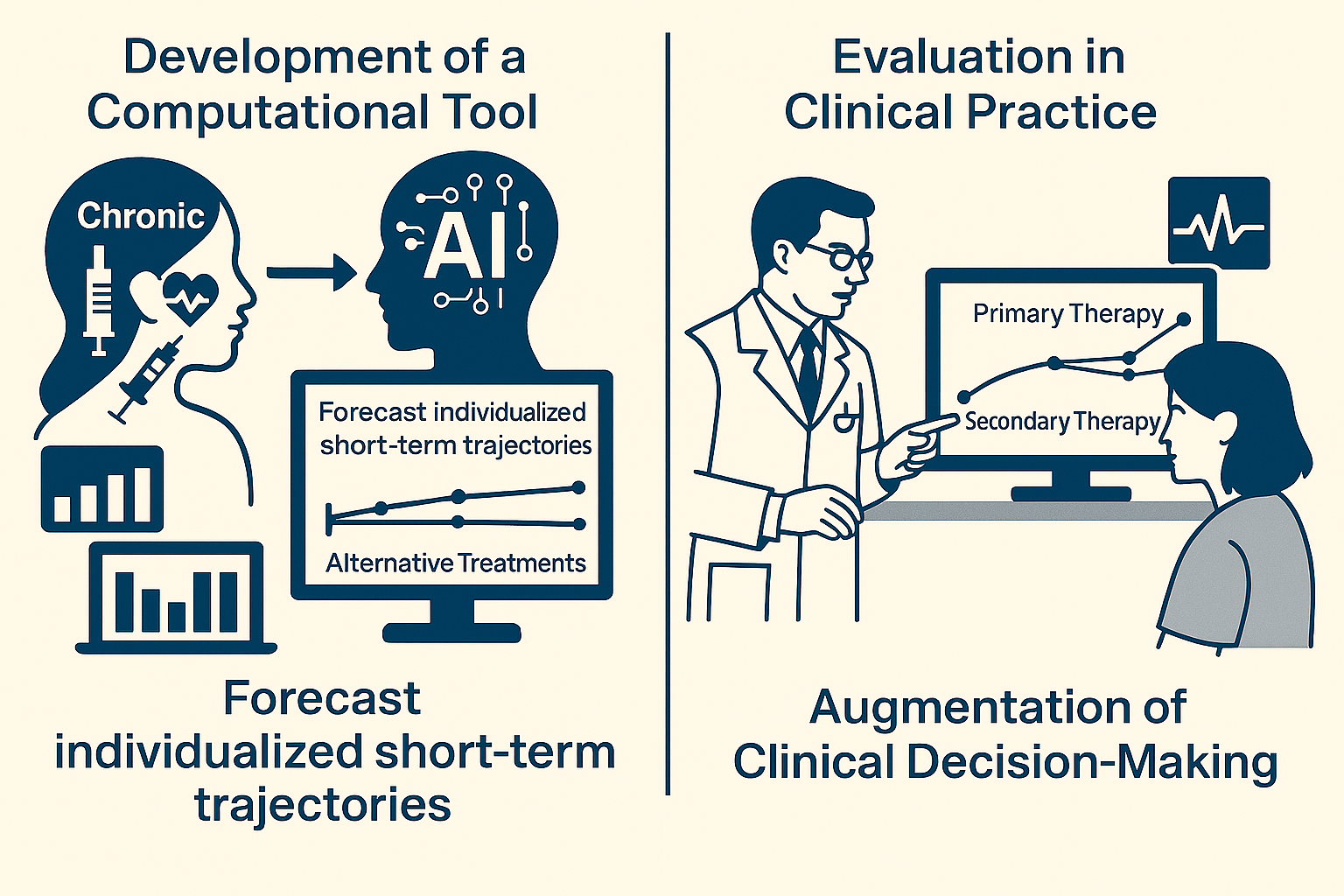
Artificial Intelligence (AI) has the potential to enhance acute care settings by assisting medical professionals in managing patients with chronic diseases during critical episodes. While advancements in AI’s technical capabilities are well-documented, the social science dimensions, particularly the decision-making processes involved, warrant critical examination. Effective integration of AI into clinical environments hinges on understanding how these tools can influence clinical decision-making. This research addresses the complexities faced by patients with chronic conditions, who often present with multiple comorbidities, concurrent therapies, and rapidly evolving physiology. Clinicians are tasked with making timely decisions, balancing primary treatments (e.g., insulin for glycemic control) with secondary therapies (e.g., antihypertensives), where interactions can significantly impact patient outcomes. Existing tools are limited in their ability to forecast short-term trajectories, conduct side-by-side alternative comparisons, and account for treatment interactions. This study aims to fill this gap by developing a computational tool intended to augment clinical decision-making in the acute care management of chronic diseases.